
Handicapped Parking Application
📖 Table of Contents
The first time I tried to park my wheelchair at a popular downtown museum, I was met with a line of cars and a single accessible spot that was already taken. It was a small moment, but it underscored the importance of knowing how to apply for handicapped parking. That experience led me to research the process. I discovered it's not just about having the right permit—it's about understanding the application, knowing where to use it, and making sure you have the documentation to back it up. ($600, gov.texas.gov)[1]
Applying for a handicapped parking application is more than just filling out a form. It involves knowing your rights, meeting specific medical criteria, and being prepared to provide proof. I spent weeks handling the process, and I learned that it's not as straightforward as I had hoped. But the end result was worth it: access to parking spaces that made my trips easier, safer, and more enjoyable.
If you're like me, you might have wondered, 'How do I even start the process?' The answer is more complicated than you think. It requires understanding the local laws, knowing the different types of permits available, and being ready to provide documentation that proves your eligibility. It's a journey that requires patience, but once you're on the right track, it can make a huge difference in your travel experience.
Why You'll Love This Handicapped Parking Application Process
- It streamlines access to key destinations, making travel more feasible.
- It offers a sense of independence and dignity when navigating public spaces.
- It provides legal protection and recognition of your needs.
- It can be customized to fit your specific medical requirements.
Understanding the Handicapped Parking Application
As of October 2026, the first step in the handicapped parking application process is understanding what qualifies you for a permit. In most cases, you must have a permanent or temporary disability that limits your ability to walk or move. I had to submit a letter from my doctor, along with proof of my condition and a valid ID. The process is designed to ensure that only those who truly need the parking privileges receive them.
It’s important to know that there are different types of handicapped parking permits. Some are issued for use in specific areas, like state or city lots, while others are valid nationwide. I applied for a state-specific permit, but I later found out that a national permit could have been more convenient for my travel plans.
Once you’ve gathered the required documents, you’ll need to complete the application form. This form typically asks for your personal information, medical details, and the type of permit you’re applying for. It’s crucial to be accurate and honest, as any discrepancies can delay or even disqualify your application.
Before applying, collect all required documents, including medical proof, ID, and any previous permits. This saves time and avoids delays.
Part of our Wheelchair accessible guide.
The Role of Medical Documentation
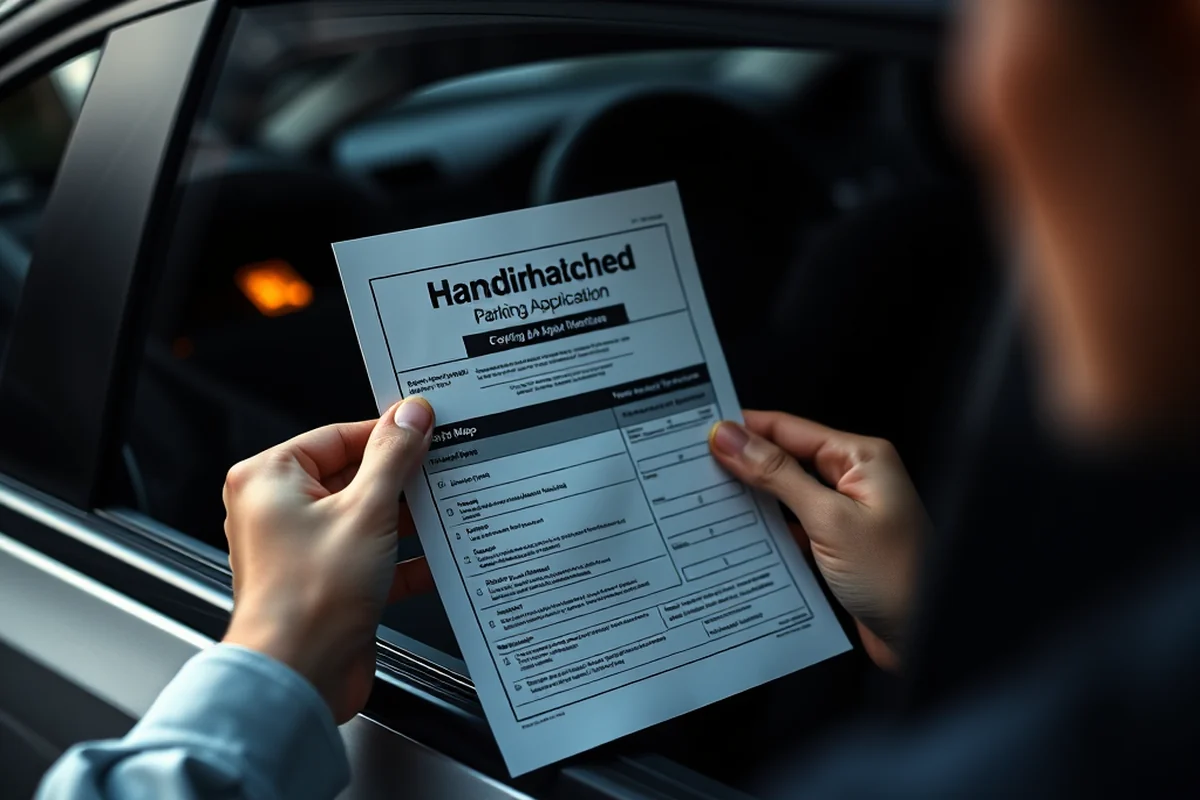
Medical documentation is the backbone of the handicapped parking application. You’ll need to provide proof of your disability, which can include a doctor’s letter, a diagnosis, or a prescription. I had to wait for my doctor to write a letter that specifically outlined my condition and its impact on my mobility.
The documentation must be recent, often within the last six months, and must be from a licensed physician. It’s important to note that generic statements like 'I have limited mobility' won’t suffice—your doctor must detail the specific limitations and how they affect your daily life.
In my case, the doctor had to specify that my mobility was significantly limited, which made me eligible for a handicapped parking permit. I recommend consulting with your doctor well in advance to ensure that your documentation is complete and accurate.[2]
Your doctor's letter is your key to accessibility.
Related: Wheelchairs for adults
Applying for Your Permit
Applying for your handicapped parking permit is the next step after gathering your documents. I applied online through the state’s transportation department, which was convenient, but I know others apply in person at local offices. The process can take a few weeks, so it’s best to apply as soon as possible.
There is usually a small application fee involved, which can vary depending on your state and the type of permit you’re applying for. I paid around $50 for my state-specific permit, but I was told that national permits may cost more. It’s a small price to pay for the convenience and accessibility it provides.
Once your application is approved, you’ll receive your permit, which can be in the form of a sticker or a plastic card. I received a sticker that I placed on my car’s windshield, making it easy to identify as a handicapped vehicle.
Start the application process as soon as you know you need a permit. This gives you time to gather documents and avoid last-minute delays.
“The first time I tried to park my wheelchair at a popular downtown museum, I was met with a line of cars and a single…”— Traveling with Disabilities Accessible editors
Related: 2027 va disability rates
Using Your Handicapped Parking Permit

Having a handicapped parking permit is only the beginning. Once you have it, you can legally park in designated spaces, which are usually closer to entrances and more accessible. I found that parking in these spaces made getting in and out of my car much easier, especially during busy times.
It’s important to remember that these spaces are reserved for those with valid permits. I’ve seen people without permits park in these spots, which can be frustrating and even dangerous. If you see someone parked in a handicapped space without a permit, it’s best to contact the local authorities.
Your permit should be visible at all times, so make sure it’s securely placed on your car. I always check my windshield to ensure my permit is still visible before leaving my car. It’s a small detail, but it can make a big difference in ensuring that you have access to the spaces you need.
Related: People with disabilities
Renewing and Replacing Your Permit
Your handicapped parking permit may need to be renewed periodically, depending on your state and the type of permit you have. I received a reminder letter from the transportation department that my permit needed renewal after two years. It was a straightforward process, but I had to submit my medical documentation again to prove I was still eligible.
If your permit is lost, stolen, or damaged, you’ll need to replace it. I had to replace mine after a storm damaged my windshield, and I had to go through the process again. It was a bit of a hassle, but it was worth it to ensure I had a valid permit.
When replacing or renewing your permit, make sure to keep a copy of your documents. I kept mine in a safe place, and it saved me time when I had to replace my permit. It’s a small step, but it can make the process much smoother.
Related: State disability insurance
Traveling with a Handicapped Permit
Traveling with a handicapped parking permit can be a great way to make your trips more accessible. I’ve found that most states recognize permits from other states, but I always check the local rules before arriving. Some cities have additional restrictions or requirements for out-of-state permits.
When I traveled to another state, I made sure to carry a copy of my permit and medical documentation. I had to show them to a local official who verified my permit was valid. It was a minor inconvenience, but it gave me peace of mind knowing my permit was recognized.
If you’re planning a trip, it’s a good idea to research the local parking laws for the area you’re visiting. Some cities have stricter rules about handicapped parking, and it’s better to be prepared than to find out too late.
Research local parking laws before you go.
Related: Disability determination services
The Benefits of a Handicapped Parking Permit
One of the biggest benefits of a handicapped parking permit is the convenience it provides. I’ve found that parking in designated spaces saves me time and energy, especially when I’m carrying a lot of luggage or using mobility aids. It also reduces the risk of injury by giving me access to spaces that are closer to entrances.
Another benefit is the sense of independence it gives me. Knowing that I can legally park in these spaces gives me confidence that I can travel freely without worrying about being forced to park in inconvenient spots. It’s a small thing, but it makes a big difference in my daily life.
Finally, a handicapped parking permit offers legal protection. If someone tries to take your spot or challenge your right to park, you have the legal backing of your permit. I’ve never had to use this, but it’s reassuring to know I have that protection.
🧳 Budget Travel with Handicapped Parking
Travel on a tight budget while still enjoying the benefits of handicapped parking.
🌅 Long Weekend Getaway
Escape for a few days and make the most of your handicapped parking permit.
👨👩👧👦 Travel with Kids
Make family trips more accessible with the right parking permit.
⛄ Off-Season Adventure
Explore the best travel destinations during the off-season with hassle-free parking.
🏨 Luxury Travel
Experience the world in comfort with handicapped parking access.
| The mistake | Why it happens | The fix |
|---|---|---|
| Applying without proper documentation | Without the required medical documentation, your application may be rejected or delayed. | Gather all necessary documents before applying and ensure they are up to date. |
| Failing to renew your permit | An expired permit is not valid and can lead to legal issues if used in a handicapped space. | Set a reminder for the renewal date and submit the necessary documents in a timely manner. |
| Not checking local rules when traveling | Some cities have specific rules for out-of-state permits, and not knowing them can cause problems. | Research the local parking laws for the area you’re visiting and keep a copy of your documents with you. |
| Using a permit inappropriately | Using a handicapped parking permit without the appropriate medical need is illegal and can result in fines. | Only use your permit if you’re eligible and need it to access the spaces legally. |
Handicapped Parking Application
Common Questions
What documents do I need to apply for a handicapped parking permit?
How long does it take to get a permit?
Can I use my permit in other states?
What happens if I don’t have a permit but need to park in a handicapped space?
References
- A Review of Accessible Parking for Persons with Disabilities (gov.texas.gov)
- Accessible Parking Space Application - South Bend 311 (311.southbendin.gov)
Cite this guide
Traveling with Disabilities Accessible (2026). Handicapped Parking Application. https://accessibleroam.com/handicapped-parking-application/
Feel free to cite or share this guide.