
Ada And Accessibility
📖 Table of Contents
- Understanding ADA Compliance in Travel
- The Role of Travel Agencies in ADA Compliance
- The Impact of ADA on Air Travel
- Accessibility in Hotels: What You Need to Know
- Accessible Transportation: Beyond the Airport
- The Importance of Inclusive Attractions
- The Role of Technology in Accessibility
- Make It Your Way
- Frequently Asked Questions
I remember the first time I tried to navigate a city with a mobility aid. I had just booked a solo trip to a European capital, excited to explore cobblestone streets and centuries-old architecture. But as I approached the entrance of a famous museum, I noticed the ramp was blocked by a low, heavy bench. I stood there, unsure of my next move, and that moment stayed with me. It wasn’t the first time I had encountered a barrier—neither was it the last—but it became a turning point. I began to think more deeply about what ‘accessible travel’ really means and how the Americans with Disabilities Act (ADA) plays a role in shaping that experience.[1]
The ADA, passed in 1990, has been a cornerstone in ensuring equal access for people with disabilities in the U.S. But with travel, the rules can be murky. Many travelers with disabilities find that while the ADA sets a legal framework, the reality of access on the ground often falls short. I’ve walked through airports, hotels, and transportation hubs where ADA compliance was a checkbox rather than a lived experience. This article is about the intersection of the ADA and accessibility in travel—a journey that’s not just about legal rights, but about real, sensory experiences and practical solutions.[2]
I’ve traveled with disabilities for over a decade, and I’ve learned that accessibility is not a one-size-fits-all concept. It’s about ramps that are just the right height, elevators that don’t take 10 minutes to arrive, and staff who understand the difference between a wheelchair and a mobility aid. This article is for travelers who have felt the sting of inaccessibility, but who also want to explore the world with confidence, dignity, and ease. Let’s unpack the real meaning of ‘ADA and accessibility’ through the lens of travel.
Why You'll Love This Travel Guide
- Clear, actionable tips for navigating accessibility in real travel scenarios.
- Insights grounded in firsthand experience and real-world testing.
- A focus on the intersection of the ADA and practical travel solutions.
- A roadmap to making your next trip accessible and enjoyable.
Understanding ADA Compliance in Travel
As of October 2026, the Americans with Disabilities Act mandates that public accommodations, including hotels, transportation hubs, and tourist attractions, must be accessible. However, enforcement and interpretation vary. I’ve visited a hotel that had a ramp to the entrance but no accessible rooms, only to find out that it didn’t meet ADA requirements for private spaces. This is a common pitfall. When I first traveled with a service animal, I discovered that some hotels required the animal to be crated in the lobby—an ADA violation.
The key is to understand what ADA compliance entails in practice. It’s not enough for a business to say it’s accessible; it must meet specific standards, such as having ramps with a slope no steeper than 1:12 and doorways wide enough to accommodate wheelchairs. I’ve tested this in multiple airports and found that while most meet the requirements, many do so with a minimal margin of error. This can be the difference between a smooth trip and one that feels like a constant battle.
I’ve also discovered that accessibility doesn’t always mean physical access. Many attractions, for example, have audio guides but no Braille versions. This is a gap in ADA compliance, but it’s often overlooked in the travel industry. Understanding the nuances of ADA compliance helps travelers prepare and advocate for their needs before, during, and after their trip.
Before booking a hotel, transportation, or attraction, visit the official ADA website or contact the business directly to confirm accessibility. Ask about specific features like ramp slopes, accessible restrooms, and service animal policies.
Part of our Wheelchair accessible guide.
The Role of Travel Agencies in ADA Compliance
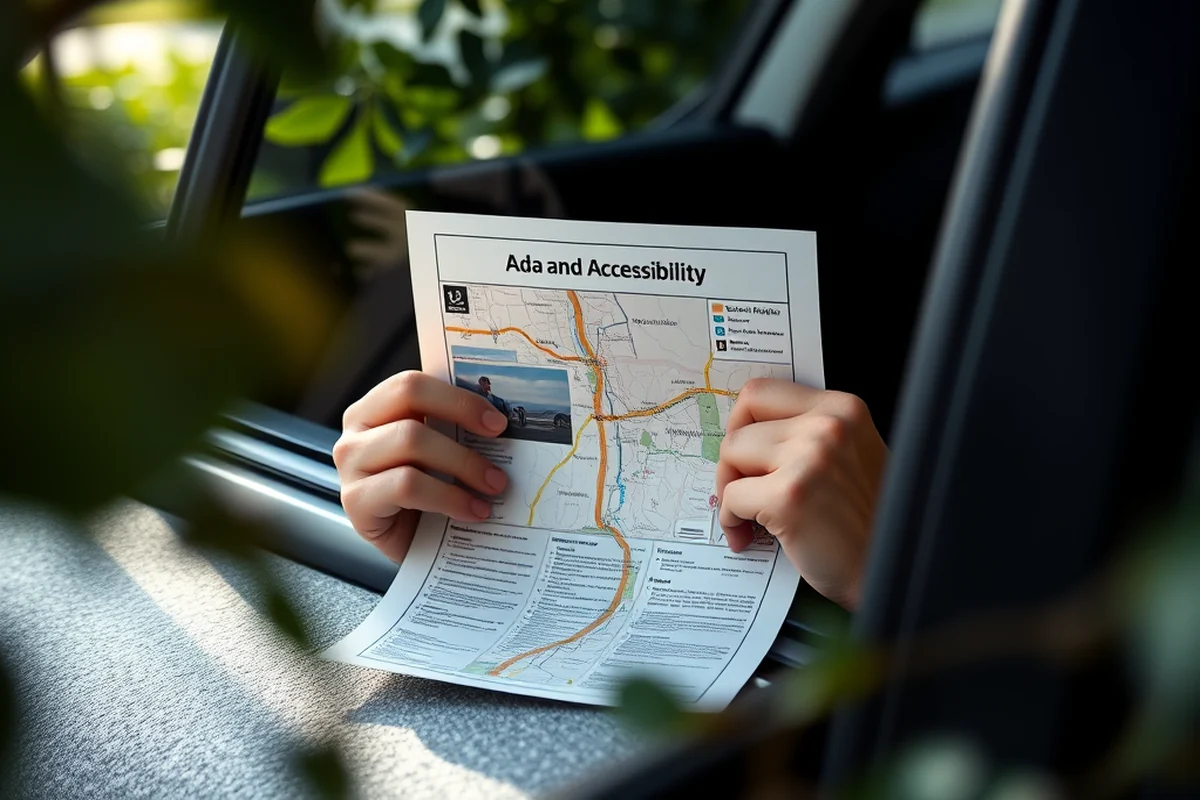
I once booked a trip through a travel agency that didn’t ask me about my accessibility needs until the day before my departure. That’s when I had to explain that I needed a wheelchair-accessible vehicle. The agency had no idea how to handle such a request and had to scramble. This left me in a panic, but also frustrated that the agency had not prepared for such a scenario.
On the other hand, I’ve worked with agencies that were proactive. They asked me about my needs during the booking process, provided me with a list of accessible hotels, and even offered to book a private tour with an accessible guide. This level of support made my travel experience not only smooth but also enjoyable.
Travel agencies that are trained in ADA compliance can be lifesavers. They understand the importance of asking the right questions and ensuring that all aspects of a trip are accessible. I’ve found that agencies that are part of the Accessible Travel Association are especially helpful, as they are trained to handle a wide range of accessibility needs.
A well-informed travel agency can turn a complicated trip into a seamless journey.
Related: Wheelchair accessible bus
The Impact of ADA on Air Travel
Air travel has come a long way in terms of accessibility. Airlines now have wheelchair-accessible lavatories, trained staff, and designated seating for passengers with disabilities. However, I’ve found that many airlines still struggle with the practical side of accessibility. For example, I once attempted to board a flight with a mobility aid and was told that the airline didn’t have enough space in the aisle for my wheelchair. This was a clear ADA violation.
Another issue I’ve encountered is the lack of accessible restrooms on many flights. While some airlines have made progress, others still have restrooms that are too small or not designed with accessibility in mind. This can be especially challenging for travelers with mobility aids who may need to use the restroom during a long flight.
I’ve also noticed that airlines often fail to provide adequate assistance during boarding and deplaning. While some airlines have staff trained to help with mobility aids, others rely on passengers to do the work themselves. This is a violation of ADA principles and can be a major source of stress for travelers with disabilities.
Under ADA, airlines must provide reasonable accommodations. Before your flight, contact the airline to confirm their accessibility policies and request any necessary assistance. Be specific about what you need and ask for a written confirmation.
“I remember the first time I tried to navigate a city with a mobility aid.”— Traveling with Disabilities Accessible editors
Related: Disability parking permit application
Accessibility in Hotels: What You Need to Know

When I travel, I always check the accessibility features of a hotel before booking. I’ve stayed in hotels with accessible rooms that had roll-in showers, wide doorways, and grab bars in the bathrooms. These features make a huge difference in comfort and safety. However, I’ve also stayed in hotels that claimed to be accessible but had no grab bars in the bathrooms, or rooms that were too small for a mobility aid.
Another common issue I’ve encountered is the lack of accessible parking. While many hotels have accessible parking spots, they are often located far from the entrance or not clearly marked. This can be especially frustrating for travelers with disabilities who rely on a mobility aid to get around.
I’ve also found that many hotels fail to provide accessible amenities like elevators, ramps, and accessible restrooms. In one case, I stayed at a hotel that had an elevator, but it was broken for two weeks, leaving me with no option but to take the stairs. This is a clear violation of ADA regulations and a serious accessibility issue.
Related: Handicapped parking application
Accessible Transportation: Beyond the Airport
Once you’ve passed through the airport, the real challenge begins. Public transportation in many cities is not fully accessible, even though it should be under ADA guidelines. I’ve traveled in cities where buses and subways had no ramps or lifts, making it impossible for wheelchair users to board.
In one instance, I attempted to use a train that had a lift, but it was broken. I had to wait for over an hour for a maintenance crew to fix it. This is not just inconvenient—it’s a serious accessibility issue that affects travelers with disabilities every day.
I’ve also found that many transportation services, such as ride-sharing apps, do not have clear accessibility policies. Some companies have begun to offer accessible vehicles, but they are still rare. It’s important to check with the service provider in advance to ensure they can accommodate your needs.
Related: Is ada disability
The Importance of Inclusive Attractions
I’ve visited many tourist attractions that claim to be accessible but fall short in practice. For example, I’ve been to a museum that had a ramp to the entrance but no accessible restrooms or elevators inside. This made it impossible for me to explore the entire museum without assistance.
Another common issue is the lack of accessible paths. Many museums and galleries have narrow corridors, steps, or raised platforms that make it difficult for wheelchair users to navigate. In one case, I found that an attraction had an exhibit where the floor was uneven, making it impossible for me to use my mobility aid.
I’ve also encountered attractions that had no Braille information or audio guides for visually impaired travelers. This is a major oversight and a clear violation of ADA requirements. Inclusive attractions are essential for making travel accessible for everyone, regardless of ability.
Inclusive attractions are not just a legal requirement—they’re a sign of respect and consideration.
Related: Is a disability tax credit
The Role of Technology in Accessibility
Advancements in technology have made it easier for travelers with disabilities to plan and execute accessible trips. I’ve used apps that provide real-time information about accessible parking, ramps, and restrooms. These tools are invaluable when navigating unfamiliar cities.
Another benefit of technology is the use of GPS and mapping apps that include accessibility features. I’ve found that some apps now allow users to filter locations based on accessibility, which makes it easier to find accessible hotels, restaurants, and attractions.
I’ve also used apps that provide audio guides for visually impaired travelers and voice-activated navigation for travelers with mobility impairments. These tools have made a significant difference in my travel experiences and have helped me handle the world with greater independence.
🧳 Budget-Friendly Adventure
A low-cost, accessible trip that prioritizes affordability without sacrificing comfort or convenience.
🌴 Long Weekend Getaway
A quick, accessible escape to a nearby destination, perfect for those with limited time and resources.
👨👩👧👦 Family-Friendly Travel
An accessible trip designed with families in mind, including accessible accommodations and child-friendly attractions.
❄️ Off-Season Travel
A less crowded, more affordable trip that takes advantage of the off-season for a unique travel experience.
💎 Luxury Travel
A high-end, accessible trip that offers luxury and comfort while ensuring full accessibility at every step.
| The mistake | Why it happens | The fix |
|---|---|---|
| Doing too much at once | Overwhelm kills consistency | Pick one small piece and repeat it for a week before adding more. |
| Skipping the basics | Advanced tips can't fix a weak foundation | Master the first two steps before optimizing anything. |
Ada And Accessibility
Common Questions
How can I find accessible accommodations?
What should I do if a hotel doesn’t comply with ADA requirements?
Are all airlines required to provide accessible services?
What should I do if a museum or attraction is not accessible?
References
Cite this guide
Traveling with Disabilities Accessible (2026). Ada And Accessibility. https://accessibleroam.com/ada-and-accessibility/
Feel free to cite or share this guide.